
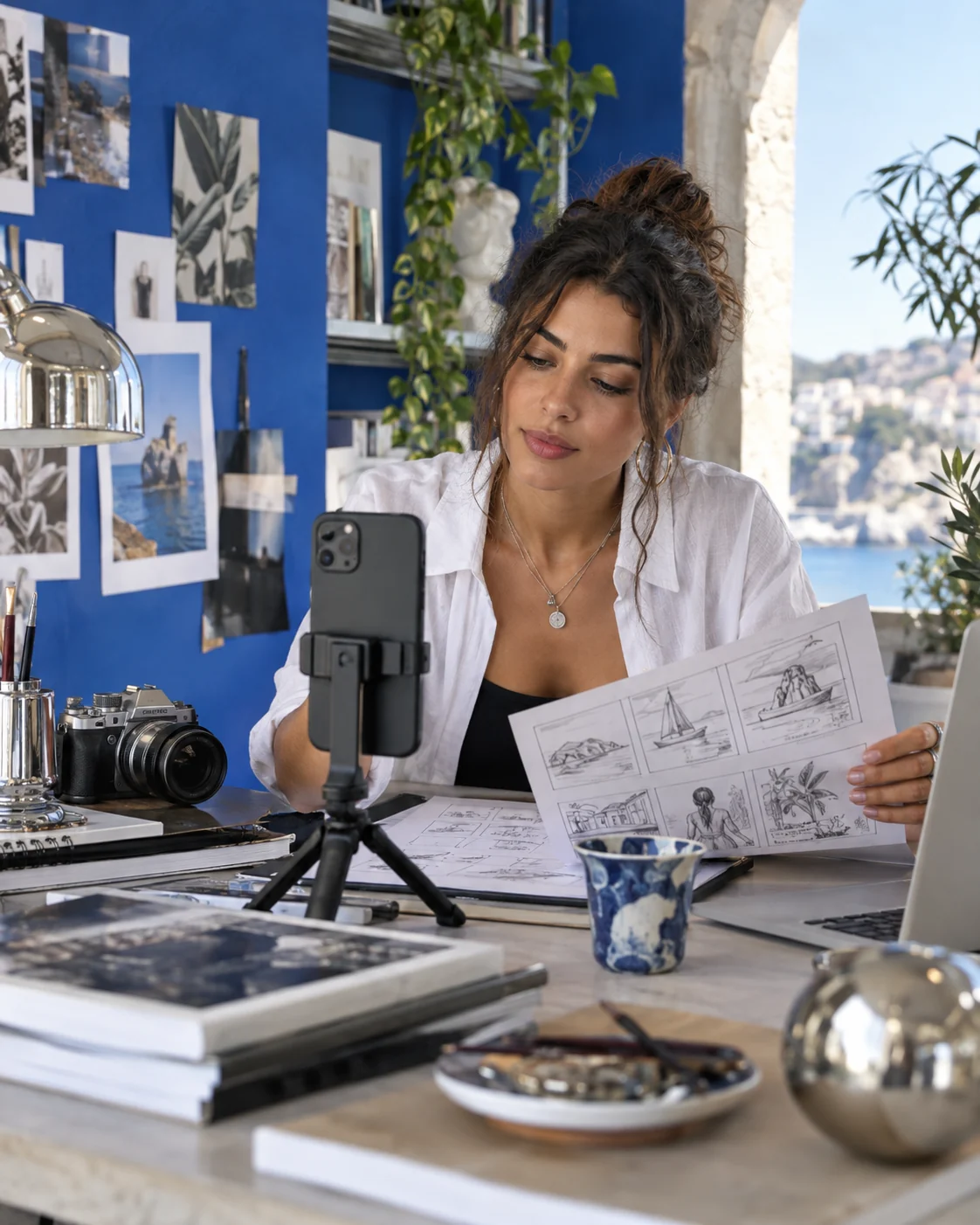
1. Choose a question worth answering
Look through recent comments, your saved ideas, or a question someone asked you directly. Choose one topic you can explain from experience.
Write one sentence describing who the posts will help and what that person should understand afterward. Keep it visible while you decide what to include.
2. Give the three posts different jobs
Use the first post to explain the idea, the second to show it in practice, and the third to answer a likely follow-up question.
For a cooking topic, you could explain how to knead dough, demonstrate it in one recipe, then answer a question about sticky dough. Give each post enough context to make sense on its own: a viewer may see the third before the first.
3. Make a small production plan
For each post, note the opening, essential shots, and one closing invitation. Estimate the preparation, recording, and editing time separately.
Reuse the same location or setup where it makes sense. Put a realistic recording slot in your calendar and simplify any idea that needs equipment or time you do not have.
4. Check clarity before publishing
Watch or read the draft as someone encountering the topic for the first time. Check that the opening matches what follows and that the main point is easy to find.
Review captions, sound, on-screen text, and any factual statements. Choose publication times you can realistically manage.
5. Keep one lesson for the next set
After publication, review the audience’s questions alongside the available viewing and engagement figures. If the same step keeps confusing people, note it as a possible topic for the next post. Also record what took longer than expected and what felt natural to make.
Choose one change for the next three posts, such as showing that step more clearly or simplifying the filming setup. Three posts give you something to try next; they are too small a sample to establish a lasting performance trend.